If you are comparing homes in Maplewood and South Orange, the style of the house can tell you a lot before you ever step inside. These two Essex County towns share a commuter-suburb history, but they do not always feel the same from one street to the next. If you want to read listings more confidently and spot the differences faster, this guide will help you understand what each town tends to offer. Let’s dive in.
Why Maplewood and South Orange Feel Different
Maplewood and South Orange both grew with rail access and the broader Newark and New York commuter market. That shared history helps explain why you will see many traditional Northeast home styles in both places.
The key difference is how that history shows up on the street. Maplewood reads more like an early 20th-century suburban mix, while South Orange often feels more layered, with a stronger 19th-century presence and a more visibly historic village character in certain areas.
Maplewood Home Styles at a Glance
Maplewood’s preservation materials note that most of its residential construction took place in the first four decades of the 20th century. As a result, many homes reflect that era in both scale and design.
You will often see a mix of bungalows, revival styles, and eclectic houses. There are also a small number of pre-1860 homes still scattered through town, but they are not the dominant visual story.
Colonial Revival in Maplewood
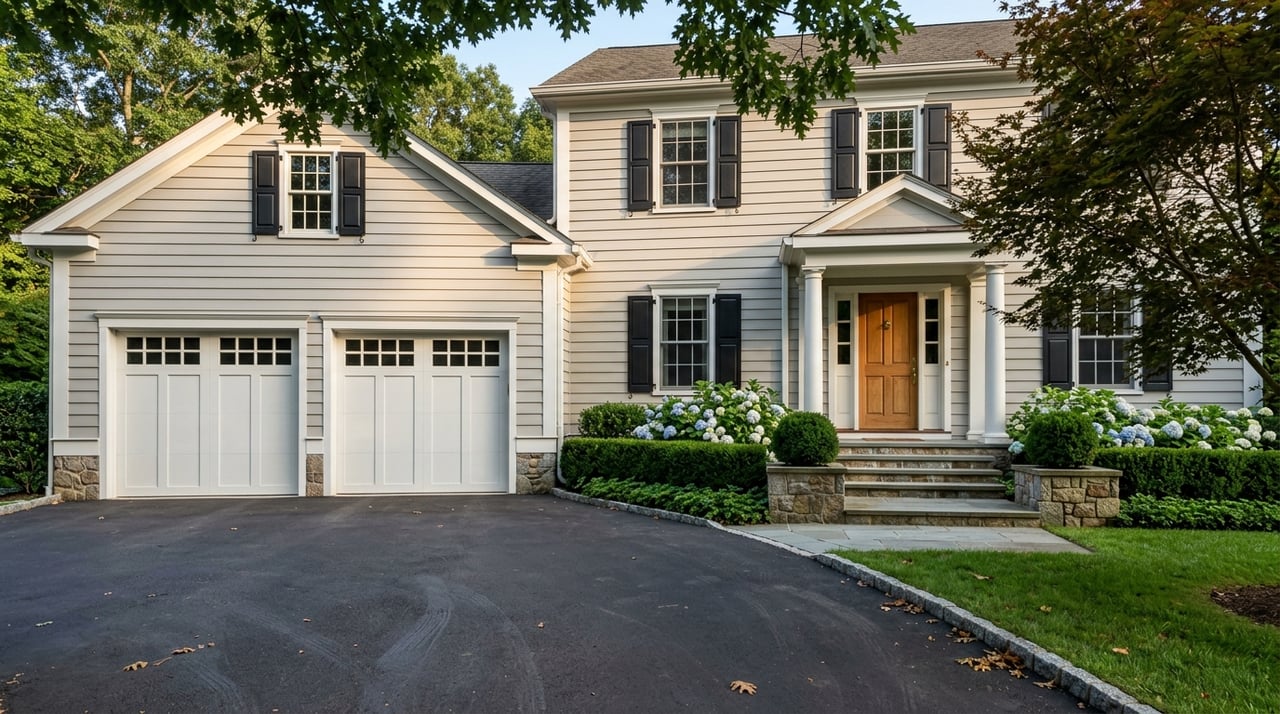
If a Maplewood listing says Colonial Revival, expect a home with balanced proportions and a formal look. These homes often feature a central entrance, columns or pilasters, pediments, and either a side-gable or gambrel roof.
Inside, the classic cue is a center hall with rooms arranged on both sides. In Maplewood, this style often appears in a more modest early suburban scale, especially compared with some of the larger period homes you may find in South Orange.
Tudor Revival in Maplewood
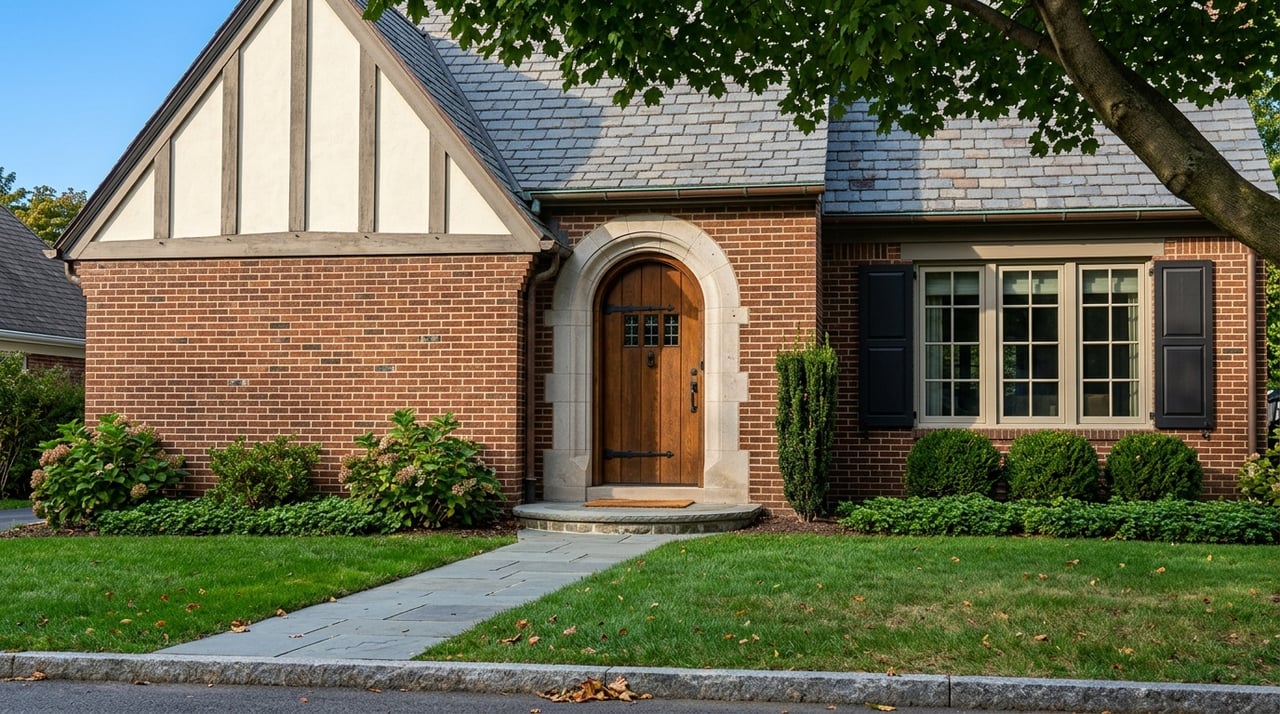
Tudor homes in Maplewood usually stand out through rooflines and exterior texture. Look for steep roofs, stucco or half-timbering, casement or diamond-paned windows, and prominent chimneys.
These homes often have smaller, more vestibule-like entries than a Colonial Revival home. In Maplewood, Tudor is part of a broader revival mix, so many homes blend Tudor details with features from other styles.
Bungalows, Craftsman, and Foursquares in Maplewood
This is one of the most useful style groups to know if you are house hunting in Maplewood. The township specifically notes that bungalows are fairly common, which makes them a meaningful part of the local housing stock.
These homes are often porch-forward and practical in form. You may see cube-like two-story foursquares, low-pitched roofs, deep eaves, exposed rafters, grouped windows, large dormers, and a more open interior flow than in more formal revival homes.
Queen Anne and Late Victorian in Maplewood
Maplewood does have late Victorian and Queen Anne examples, but they are less common. The township notes only a handful on streets such as Burnett Street and Maple Avenue.
If you do come across one, look for asymmetrical façades, decorative porch woodwork, shingles, turrets or towers, and a less predictable room layout. These homes tend to feel more ornamental and less restrained than Maplewood’s more common early 20th-century houses.
South Orange Home Styles at a Glance
South Orange’s official history describes the village as having authentic Tudor, Colonial, and Victorian homes. Its 2021 Master Plan also states that the town’s historic character remains a major draw for home buyers.
In practical terms, South Orange often feels more varied from a historical design standpoint. The architecture is not just about the individual house, but also about how homes sit on the street, including setbacks, lot depth, and roof complexity.
Montrose Park Shapes the South Orange Story
Montrose Park is the clearest architectural showcase in South Orange. Planning documents identify it as the village’s only currently designated historic neighborhood, with homes dating mainly from 1870 to 1930.
Within that district, Colonial Revival is the most common style, especially Georgian, Adam, and Dutch Colonial variants. Shingle Style is also prominent, while Tudor Revival and Queen Anne are common parts of the mix.
The district is also known for physical patterns that affect how homes feel in person. Northern Montrose Park includes unusually large lots, commonly 100 by 200 feet, and many houses were designed as large dwellings on curving streets with uniform setbacks.
Colonial Revival in South Orange
If you are looking at Colonial Revival homes in South Orange, you may notice a more formal and sometimes larger-scale presentation. The style still centers on symmetry, a central hall, and a composed front elevation, but in South Orange it often appears within a stronger historic streetscape context.
That means the lot, the setback, and the neighboring homes may shape your impression just as much as the façade itself. In some areas, the house style and the street pattern work together to create the overall sense of place.
Tudor and Victorian Presence in South Orange
South Orange includes Tudor and Victorian homes as part of its broader historic character. In contrast to Maplewood, where these styles can appear more selectively, South Orange often presents them as part of a more visibly varied historic village fabric.
For buyers, that can mean more roof complexity, more ornament, and a stronger sense of architectural layering from block to block. It can also mean that two nearby homes may share an era but look very different in massing and detail.
Key Visual Differences for Buyers
When you compare Maplewood and South Orange, the question is not which town has historic homes. Both do. The more helpful question is what kind of visual pattern you are most likely to see as you tour homes.
Here are some of the quickest clues to watch for:
- Maplewood often reads as compact, early 20th-century, and porch-forward, with many bungalows, foursquares, Colonials, and Tudors.
- South Orange often reads as more layered and village-like, with a stronger concentration of larger Victorian and period-revival homes, especially around Montrose Park.
- Maplewood Colonials are often modestly scaled compared with some South Orange period homes.
- South Orange streetscapes may place more emphasis on lot depth, setbacks, and the relationship between homes on the block.
- Maplewood hybrids are common, so one house may combine Colonial, Tudor, Italian Revival, and Craftsman elements rather than fit a textbook label.
How to Read Listing Descriptions Better
Real estate listings often use style labels quickly, but those labels become much more useful when you know what they usually mean in each town. A style name is not just decorative language. It can give you clues about floor plan, entry experience, roof shape, and curb appeal.
What Colonial Revival Usually Signals
If a listing says Colonial Revival, look for:
- Symmetry
- A central entrance
- A center-hall layout
- A more formal front elevation
In South Orange, this may appear on a larger lot or within a more historically layered setting. In Maplewood, it often shows up in a more modest 1920s or 1930s suburban scale.
What Tudor Usually Signals
If a listing says Tudor, look for:
- Steep rooflines
- Prominent chimneys
- Casement or diamond-paned windows
- A smaller entry vestibule
In Maplewood, Tudor often sits within a broader revival blend. In South Orange, it can be part of a more varied historic streetscape.
What Bungalow or Craftsman Usually Signals
If a listing says Bungalow or Craftsman, think:
- Low-slung rooflines
- Strong porch presence
- Deep eaves
- More open interior flow
This is especially useful in Maplewood, where bungalows are fairly common. If you are scanning listing photos and notice a porch-forward home with broad eaves and grouped windows, this may be the style you are seeing.
What Queen Anne or Late Victorian Usually Signals
If a listing says Queen Anne or late Victorian, expect:
- Asymmetry
- Decorative porch trim
- Irregular massing
- More ornate exterior details
In Maplewood, these homes tend to appear in smaller pockets. In South Orange, they are more closely tied to the village’s larger historic mix, especially near Montrose Park.
What Matters Beyond Style Names
Style is helpful, but it is not the only thing worth comparing. In these two towns, some of the biggest differences are visible in the setting around the house.
As you tour homes, pay close attention to:
- Lot size
- Street pattern
- Setbacks
- Roof complexity
- Façade ornament
- Historic district context
These details can shape how a home lives, how private it feels, and how consistent the surrounding streetscape appears. In South Orange especially, the block itself may tell you as much as the individual house.
Which Town Style Fits Your Taste?
If you love early 20th-century suburban character with many bungalows, foursquares, and modest revival homes, Maplewood may feel especially appealing. Its housing stock often delivers charm without requiring every house to make a grand architectural statement.
If you are drawn to a more layered historic setting with larger period homes, more varied street composition, and a stronger village-style historic presence, South Orange may stand out. Montrose Park, in particular, shows how architecture, lot size, and street design come together to create a distinctive look.
The best way to compare the two is not by relying on one label alone. It is by looking at the house, the lot, and the block together.
Whether you are buying, selling, or preparing a home for market in Maplewood or South Orange, architectural style matters because it shapes how buyers see value and character. If you want local guidance on how a home’s design story fits today’s market, Judith Daniels offers thoughtful, high-touch advice tailored to these Midtown Direct communities.
FAQs
What home styles are most common in Maplewood, NJ?
- Maplewood is known for early 20th-century homes, especially bungalows, foursquares, Colonial Revival houses, Tudor Revival houses, and eclectic blends of those styles.
What home styles are most common in South Orange, NJ?
- South Orange is known for Colonial, Tudor, and Victorian homes, with Montrose Park showing a strong mix of Colonial Revival, Shingle Style, Tudor Revival, and Queen Anne architecture.
How are Maplewood and South Orange homes different?
- Maplewood often feels like a compact early 20th-century suburban mix, while South Orange often feels more historically layered, with a stronger concentration of larger Victorian and period-revival homes in some areas.
What does Colonial Revival mean in Maplewood or South Orange listings?
- Colonial Revival usually means a symmetrical exterior, central entrance, and center-hall layout, with South Orange examples often appearing in a larger-lot historic context and Maplewood examples often appearing in a more modest suburban scale.
What should buyers look for beyond home style in South Orange and Maplewood?
- Buyers should also look at lot size, street pattern, setbacks, roof complexity, façade detail, and whether the home sits within a historic district context.